

In a sense, I have been writing this book for thirty-five years. Who the Buddha was and what he was like has intrigued and fascinated me since I became a Buddhist in my late teens. In my 1989 book The Buddha and His Disciples I looked at some aspects of his persona, his style of teaching and his relationships. and in the subsequent decades I wrote several articles dealing with other aspects of the Buddha’s life: his physical appearance, his habits, his travels and even his diet. Some of that earlier work has been incorporated into the present book. To get at least some feel for the world in which the Buddha lived, I also undertook three walking tours through India that followed in his footsteps: going from Bodh Gaya to Varanasi; from Bodh Gaya to Rajgir and back again; and, longest of all, retracing the Buddha’s final journey from Rajgir to Kusinara. In the last few years I have also immersed myself in Vedic literature from both the early and late periods, the better to understand the religious and social background to the Buddha’s life. In writing this book I have received generous help and encouragement from many people. Discussions with Anandajoti Bhikkhu, Peter Prins, Sarah Shaw and Peter Harvey have been enormously helpful mainly on matters related to the Dhamma. Input from Bhikkhu Khemarato, Bhikkhunī Acala, Chris Burke and Ranjith Dissanayake helped fine-tune the final draft.

Footprints in the dust
Buddhism teaches that each person comes into their present life from an earlier one and that most people will have another life when their present one ends. This process of being born, dying and being reborn is called samsara and only ceases when one attains a state called awakening, bodhi, more commonly known as Nirvana. Like everyone else, the Buddha had many lives before his final one as Gotarna, and the Buddhist tradition created fictional biographies of over five hundred of these former lives, recounted in a book called the Jätaka. What is unique about the Buddha is not that he had former incarnations, fictional or otherwise, but that in the centuries after he attained Nirvana devotees and admirers have continued to ‘reincarnate him in a sense, by creating new ‘lives’ for him, some of these more incredible than his former ones as recounted in the Jätaka. Although physically and in a number of other ways the Buddha was an ordinary human being, some participants at the Third Buddhist Council, which took place around the middle of the second century BCE, asserted that such was his purity that his faeces had a fragrant smell. There were, however, those who maintained a more realistic view of the Buddha and who gave a common sense rebuttal to this claim. If this were true, they argued, it would have required the Buddha to eat perfume,
In stock
Related Products

සාර්ථකත්වයේ රහස – Sarthakathwaye rahasa
Original price was: Rs. 800.00.Rs. 720.00Current price is: Rs. 720.00.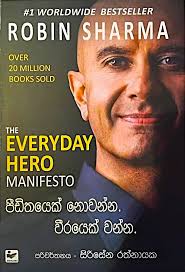
පීඩිතයෙක් නොවන්න.වීරයෙක් වන්න – Peedithayek nowanna.Weerayek wanna.
Original price was: Rs. 1,400.00.Rs. 1,120.00Current price is: Rs. 1,120.00.
ඒතං මංගල මුත්තමං – Ethan mangala muththaman
Original price was: Rs. 650.00.Rs. 520.00Current price is: Rs. 520.00.
අර්ථවත් ජීවිතයක් ගොඩනගා ගන්නේ මෙහෙමයි – The Power of Positive Thinking
Original price was: Rs. 900.00.Rs. 720.00Current price is: Rs. 720.00.
දියුණූවේ උපරිමයට 80/20 ක්රමවේදය – Diyunuwe uparimayata 80/20 kramawedaya
Original price was: Rs. 1,200.00.Rs. 960.00Current price is: Rs. 960.00.
In stock
Reviews
There are no reviews yet.